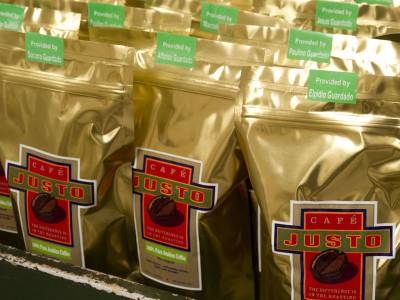
Good coffee for a good cause
 The Presbyterian Coffee Project offers a special link between congregations and communities around the world. Churches can now reach out to neighbors overseas not only with the prayers and offerings we give, but with the goods and products we purchase. A warm cup of coffee (or tea) in our hands is perhaps the most tangible daily connection we have with farmers around the world. It represents warmth, hospitality, fellowship, hard work and life’s pleasures both fine and simple.
Buying fair trade through the Presbyterian Coffee Project ensures that more of the money we spend on coffee reaches the hardworking farmers who actually grow it. Support small-scale farming cooperatives through the Small Farmer Fund, administered by the Presbyterian Hunger Program.
Coffee Project Poster
Coordinating the Presbyterian Coffee Project in your congregation is a fun and rewarding experience! It’s a great way to build fellowship among members of all ages and bring justice to coffee farmers around the world.
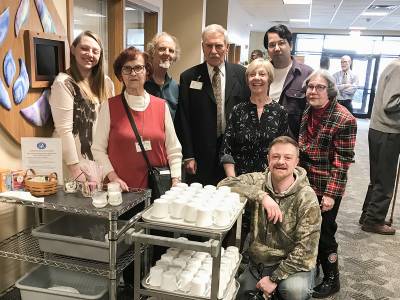
The basic way a congregation participates is to serve fair trade coffee during fellowship hour and church events. Many congregations take their participation steps further. The Presbyterian Hunger Program and Equal Exchange want to equip you to promote fair trade and improve the lives of small farmers. Visit the Equal Exchange Presbyterian Coffee Project page for more information.
Get started
Set your goal (or goals):
- To serve fair trade coffee and tea at fellowship hour and other church events.
- To sell fair trade coffee, tea, cocoa and other products to members for home and office use.
- To use fair trade coffee as a basis for education about economic, social and environmental issues.
- To sell fair trade coffee and other products as a fundraiser for a local project or the Presbyterian Small Farmer Fund.
Identify members who will volunteer to help coordinate the project.
Get seed money to make the first coffee order — ask the session, Mission Committee, or women’s or men’s group to give. Be sure to keep careful records. Ask the church bookkeeper or accountant for guidance.
Order the coffee by calling Equal Exchange at (774) 776-7366 to place your order or order from their online store. Equal Exchange staff can provide expert advice on what coffees are most popular among Presbyterians and instructions for brewing and encouragement as you get your project started.
Start small and order two or three coffees to brew and offer at fellowship hour or adult forums. Consider having a taste test to see what flavors are favorites in your congregation.
Announce your church’s participation through Minutes for Mission, newsletter articles, announcements in the bulletin, etc.
Pass a church resolution to serve only fair trade coffee, tea and cocoa for all church functions.
Serve the coffee
When you serve the coffee, tea and cocoa, make educational resources available for the congregation to learn about fair trade and the difference it makes for small-scale farmers and their families. Call the PC(USA) at (800) 728-7228, x5626, for materials. (You may want to build interest and anticipation by educating the congregation about fair trade before you begin serving and selling.)
Create an attractive display for the coffee serving area. A poster and other reproducible materials will be received with your first shipment. Be creative — use Latin American and African fabrics and handcrafts to add color and interest. Beautiful items from around the world are available through any of our partner organizations in the PC(USA) Enough for Everyone Global Marketplace.
Consider setting out a basket for free-will donations at fellowship hour to help cover the cost of the coffee. Church members generously place their gifts in the offering plate each Sunday; supporting fair trade is another way to help people in need around the world.
Keep going. Serve fair trade coffee every Sunday and have a sales table or take orders.
Sell the coffee
Make Equal Exchange products available to members for use in their homes and offices by:
- Holding a Fair Trade Sale (perhaps once a month or more often as interest grows).
- Creating a buyers’ club.
- Developing an order form for members to use to pay.
- Selling during holiday bazaars, church auctions or yard sales and other events.
When selling fair trade coffee, you may choose to include a surcharge on each bag. Use your discretion in determining the amount. The additional money can be reinvested into the project to cover shipping or other costs or give to a special project.
Educate church members
Discuss fair trade issues in Sunday school, study groups and youth or adult forums.
Add interest to the project in your congregation by holding a forum or hosting a special speaker.
Promote opportunities to go to coffee-growing regions and see firsthand the benefits of fair trade.
Share the good news
Give gift baskets of fairly traded products to welcome new members, show appreciation to faithful volunteers, as Christmas gifts or on other occasions.
Encourage congregations in your presbytery to join the Presbyterian Coffee Project. Contact Enough for Everyone at PC(USA) or Equal Exchange for support.
Offer Equal Exchange at community events, farmers markets or fundraisers. Use the sales to benefit your fundraising project, get others involved and raise awareness about fair trade and the plight of small farmers.
Encourage local businesses and stores to use Equal Exchange products.
Thank your local businesses that already support fair trade.
One answer for small-scale farmers is fair trade. Fair trade shares the bounty of the coffee trade with those who grow the crop, helping them build a better future for themselves and their communities. Through fair trade, farmers earn a fairer share of income, have access to services that are otherwise unavailable and gain long-term trading partners they can trust.
By working together and pooling their resources to form a cooperative, farmers can sell their coffee directly to international buyers without relying on middlemen. They receive a fair price that not only covers their costs of production but guarantees a fair wage for their labors.
Fair trade far surpasses the temporary assistance provided to farmers through charity. Instead, the ongoing business of long-term, fair trade relationships consistently contributes to the living conditions of farmers, their families and their communities. Cooperatives use profits from fair trade coffee sales to establish community development or improvement programs such as schools, health clinics and training in areas such as leadership development. Fair trade farmers tend to use environmentally friendly growing practices — such as organic farming, composting and shade growing (interspersing coffee trees among other plants) — all of which benefit the farmers, the land and the quality of the coffee.
The Presbyterian Coffee Project offers a full line of fairly traded coffees (in bulk whole bean, packaged whole bean and drip grind, percolator grind and pillow pack varieties) as well as fairly traded teas, cocoa, chocolate bars, sugar packets and more.
There are four convenient ways to bring the Presbyterian Coffee Project to your congregation.
Online: Visit Equal Exchange’s secure Web store for quick and convenient credit card purchases.
By Phone: Call Equal Exchange at (774) 776-7366 to place a phone order using a credit card. Mention the Presbyterian Coffee Project when placing your order.
Questions about orders can be directed to Equal Exchange by emailing or calling (774) 776-7366.
Thank you for your participation in the Presbyterian Coffee Project!