Order Deadline: March 1, 2024 5pm CST
PC(USA) congregations join thousands of Ecumenical houses of worship in ordering Eco-Palms! Even as worship and gathering looked much different, sustainable palms provided through this project were used in so many creative ways on Palm Sunday over the last few years. Working together, we do make a difference!
Supply chain issues are impacting all areas of our lives but the orders of these palms mean livelihood for harvesters, now, more than ever.
Congregations that order Eco-Palms should receive an email containing your order number the day you place your order. The Monday before Palm Sunday, customers can log into their account to get the FedEx tracking number to show when the palms should arrive.
Eco-Palms staff can be contacted by phone at 651-487-7189.
2024 pricing can be found on the Eco-Palms site.
Eco-Palms Materials for Your Congregation
Download a bulletin insert for your congregation for Palm Sunday to help explain why you’re using eco-palms and why it matters.
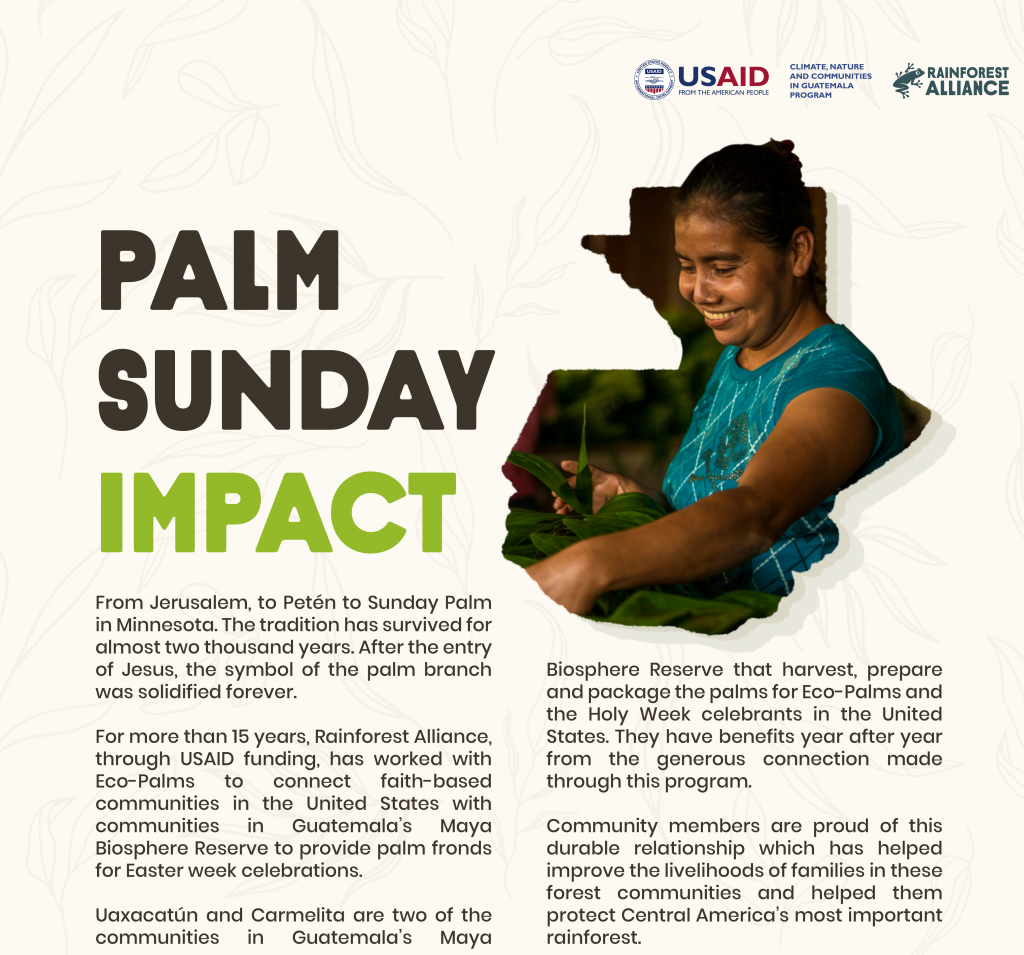
Download an impact handout for your congregation for Palm Sunday to help explain why ordering Eco-Palms matters.
Care Instructions
When your palms arrive, please open the box to make sure they are in good condition. You should store them in a cool location (such as a refrigerator or cool basement) and trim the stems 2-3 inches and place them upright in water (as you would a vase of flowers) until Palm Sunday. It is imperative you open the box immediately and air the palms out in order to prevent them from molding or deteriorating. For more information, please visit www.ecopalms.org.
Make social and environmental justice part of your congregation’s worship
The great crowd that had come to the festival heard that Jesus was coming to Jerusalem. So they took branches of palm trees and went out to meet him, shouting, “Hosanna! Blessed is the one who comes in the name of the Lord — the King of Israel!” (John 12:12-13)
Jesus’ entrance into Jerusalem, accented by the jubilant waving of palm branches, is re-enacted each Palm Sunday in Presbyterian and other Christian congregations worldwide as Holy Week observances begin. Unfortunately for the communities where these palms are harvested, palm fronds do not always represent the same jubilation they do for us.
In 2007 the PC(USA) teamed up with Lutheran World Relief, Catholic Relief Services and the University of Minnesota to offer congregations the option of purchasing responsibly harvested Eco-Palm branches for Palm Sunday. The palms come from communities in Mexico and Guatemala where workers are paid fairly and engage in sustainable harvesting in order to protect the local ecosystem.
Why order Eco-Palms?
- Approximately 300 million palm fronds are consumed in the United States annually.
- A congregation of 1,250 members orders approximately 700 fronds for Palm Sunday services.
- Eco-palms are purchased directly from harvesters at five to six times the normal payment per frond.
- Your purchase of eco-palms helps improve standards of living and protect forests.
Eco-Palms and your church: your role in supporting social and environmental justice
More than 300 million palm fronds are harvested each year for U.S. consumption alone — most of them for Palm Sunday, but also for floral displays for church-related events. Your congregation’s commitment to purchase eco-palms plays an important role in protecting forests, local jobs, and sustainable livelihoods in the harvesting communities.