08038
January 15, 2008
We are not there yet!
Policy on inclusion of people with disabilities awaits implementation
by the Rev. Belinda M. Curry
Advisory Committee on Social Witness Policy
LOUISVILLE — “We envision a church that embodies the creative movement from awareness, through accessibility and integration, to full inclusion, and thus bears healing witness to the world.”
This statement — contained in Living into the Body of Christ: Towards Full Inclusion of People with Disabilities, approved by the 217th General Assembly (2006) in Birmingham, AL — summarizes the prophetic public witness of the Presbyterian Church (U.S.A.) in the battle against disability segregation or exclusion that should be fought in both our religious and secular institutions.
The Assembly challenged the members of the PC(USA) and its entities to seek ways to make this goal a reality, including support for the ongoing efforts of our ecumenical partners and other appropriate non-religious institutions.
The action of the Assembly reaffirmed the denomination’s ongoing efforts to “unmask idolatries in Church and culture, to hear the voices of peoples long silenced, and to work with others for justice, freedom, and peace.” (A Brief Statement of Faith, The Book of Confessions, 10:4, lines 69-71).
Unlike the 1977 General Assembly’s report, That All May Enter — a resource designed to help congregations searching for ways to address the needs of people living with disabilities in the community — the 2006 policy acknowledges and affirms that people with disabilities do not want only partial inclusion in the life of the church or any other institution.
Instead, people with disabilities, like other members of the Body of Christ desire (as appropriate) to be included fully in every aspect of the life of the church and other institutions. People with disabilities desire to serve in various paid and voluntary positions in the church and society. This is the essential message conveyed throughout this policy. It is a move from the focus on access and physical assistance structures in the 1977 Report to participation even in leadership by persons with disabilities.
Living into the Body of Christ draws heavily from the Old and New Testaments. For example, the authors of this policy remind us that “Various leaders of the people of Israel throughout the Old Testament have lived with a disability: Jacob with his physical limitations; Moses with his language problems; Naaman with leprosy; Mephibosheth with his physical disability, et al. In choosing these most-unlikely people to be leaders of the Israelites, our attention is on the ways that God uses those the rest of us would not necessarily choose to be vessels of God’s message of love for all creation.”
In the Gospel of Mark, the report’s authors remind us that Jesus “constantly surrounded himself with and moved among people with either obvious or hidden disabilities. . . the man with leprosy (Mark 1:40-45) . . . the woman hemorrhaging (Mark 5:34). . . Jesus practiced a ministry of being with others, not a ministry of always doing to or for others, even in his healings. . . . In his healing of others, Jesus directs our attention to the liberating, reconciling, empowering love of God.”
People living with disabilities in this present age are crying out to the church to be like Jesus by practicing a ministry of being with them rather than always doing to or for them.
They call us to remember that “Scripture does not say that the one with a disability cannot be the caregiver, or that the person who is considered ‘sick’ is not able to reciprocate.”
Those of us with disabilities, likewise, need to remember that the Gospel is a challenge to “grow in discipleship and services of others.”
As the PC(USA) presses onward in the 21st century, Living into the Body of Christ can serve as a model in guiding the church to find exciting ways to work with people living with disabilities to ensure that they can be included in every aspect of Christ’s Church and secular institutions.
We are not there yet!
For more than 25 years, I have served and worked with persons living with disabilities. I have learned from the community where I grew up; through my undergraduate and graduate studies; and as a member of the North Mississippi Regional Center’s Adopt-A-Friends Program, which brings together people without disabilities with people living with a physical or mental disability.
These experiences have heightened my awareness that those things that may seem insignificant to a person without a disability can be very significant to a person living with a disability. This is one of the ways Living into the Body of Christ challenges Presbyterians to “think outside the box” so the church can become a more open and welcoming faith community for all God’s people.
Specifically, the policy challenges us in four significant ways:
First, Living into the Body of Christ challenges us to support and advocate for educational practices that will ensure that people living with disabilities are no longer excluded from the ongoing congregational activities in which people without disabilities participate. These educational practices should take into consideration the abilities and limitations of all the members of a particular congregation or faith community.
They include: the participation of deaf interpreters during Worship, Sunday School or other gatherings; making resources available in brail; and the use of “people first language” that is not demeaning of persons living with a disability, language that affirms our primary Christian identity is found in Christ and not our abilities or limitations.
Second, Living into the Body of Christ challenges us to support current disabilities laws — such as the Ticket to Work Incentives Improvement Act of 1999 — and advocate for new legislation that affirms the full humanity and advances the full inclusion of people with disabilities. Through Ticket to Work training and support programs, people living with disabilities have an effective resource to assist them in finding and retaining employment.
The 1990 American with Disabilities Act is another important law that seeks to protect the rights of people living with disabilities. Although churches are exempted from many of the provision contained in this so called “civil rights bill” for people living with disabilities, Living into the Body of Christ encourages them to “seek to satisfy the requirements of the law in providing accessible facilities and reasonable accommodations to all persons living with disabilities.”
Various entities of the General Assembly are available to assist individuals, congregations, sessions, peace and justice committees, etc., in strengthening ministries with persons living with disabilities.
Presbyterians for Disabilities Concerns (PDC), a network of the Presbyterian Health, Education and Welfare Associate (PHEWA) and the Presbyterian Washington Office (PWO) constantly monitor new legislative initiatives in light of the PC(USA)’s disabilities policies.
One of the assigned responsibilities of the General Assembly Committee on Representation (GACOR) is to “serve both as an advocate for the representation of . . . persons with disabilities, and as a continuing resource to the particular governing body in [this] area.”
Third, Living into the Body of Christ challenges us to become more aware of our ecumenical partners’ disability work so we can support their efforts. The Ecumenical Disability Advocacy Network (EDAN) of the World Council of Churches, for instance, was established shortly after the WCC’s Eighth Assembly in Harare, Zimbabwe in December 1998. EDAN supports churches, non-church organizations, and individuals concerned about issues affecting people living with disabilities globally
Fourth, Living into the Body of Christ challenges us to “shake off” our “us versus them” mentality regarding people with disabilities, to begin to experience fully the “we-ness” that people with and without disabilities bring to the Body of Christ.
This biblical sense of we-ness or solidarity we posses is best expressed by Paul in Romans 3:24: “we are justified by [God’s] grace as a gift, through the redemption that is in Christ Jesus.” In I Cor. 12:24b-26, he adds: “God has so arranged the body, giving the greater honor to the inferior member, that there may be no dissension within the body, but the members may have the same care for one another. If one member suffers, all suffer together with it; if one member is honored, all rejoice together with it.”
These words remind Presbyterians that if they want to be like Jesus Christ they must show each other the same kind of compassion and care that Jesus, through his earthly ministry, showed over 2000 years ago to those considered the least of these.
Living into the Body of Christ must be implemented fully throughout this denomination if the PCUSA envisions itself as becoming a faith community that the policy states “embodies the creative movement from awareness, through accessibility and integration, to full inclusion, and thus bears healing witness to the world.”
Individual Presbyterians, sessions, boards of deacons, youth and older adult groups, and other church leaders are encouraged to study this policy and to look for creative ways to implement it in their particular contexts. All are also encouraged to include people living with disabilities to participate fully in these discussions. Through this process, the report’s authors believe a more diverse and inclusive community can discern how the Lord might work through the church to transform its institutions into welcoming centers for God’s people, regardless of physical abilities/limitations.
Earlier in 2007 the Office of the General Assembly mailed each PC(USA) congregation a copy of Living into the Body of Christ (with study guide) on DVD. Print copies are available for purchase at $4.00 each through the Presbyterian Distribution Center (PDS), 100 Witherspoon Street, Louisville, KY 40202-1396, Phone: 1-800-524-2612. When placing your orders, please specify PDS order#OGA-06-091.
In addition, a free PDF copy of Living into the Body of Christ can be downloaded from the OGA Web site.
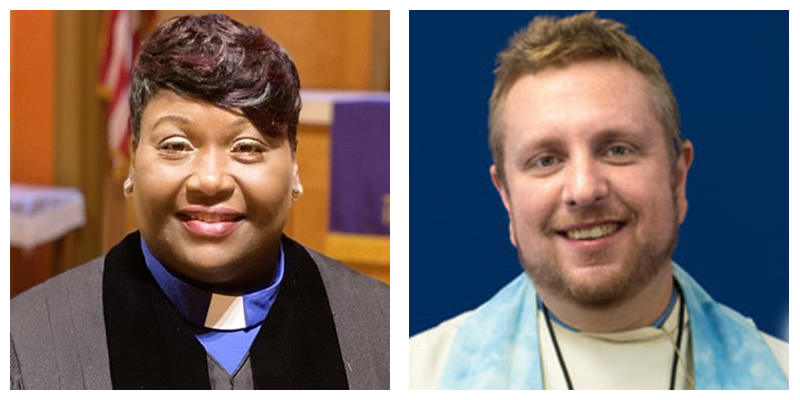
The Rev. Belinda M. Curry is associate for policy development and interpretation with the General Assembly of the Presbyterian Church (U.S.A.)’s Advisory Committee on Social Committee on Social Witness Policy. |