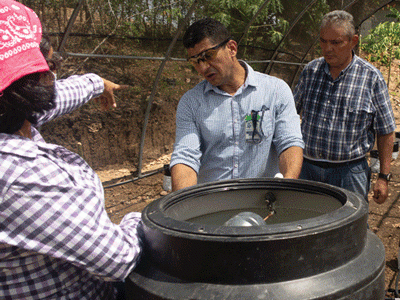
Our current issue — March/April 2023

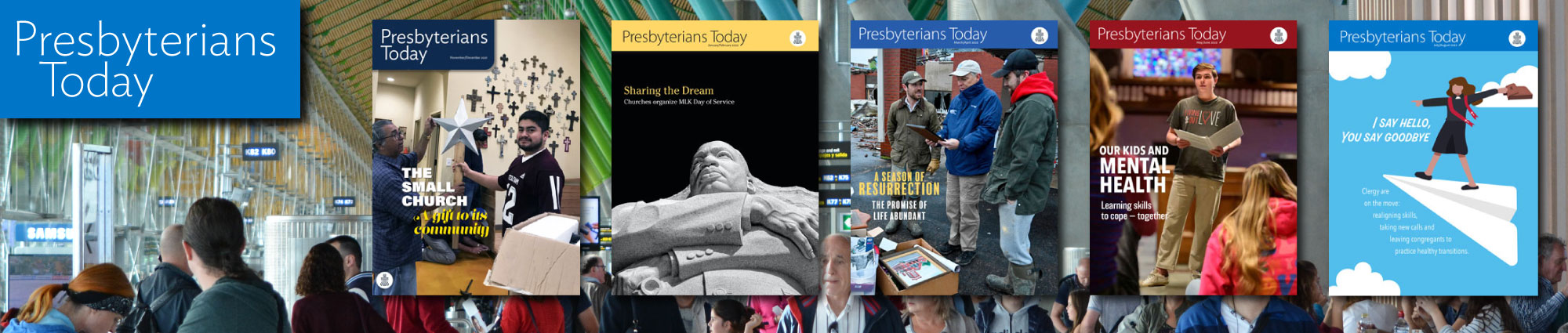
The Best of Presbyterians Today issue
As we enter a season of dreaming and discerning what God has ahead for Presbyterians Today, we wanted to look back and celebrate the wonderful people, places and projects we’ve been blessed to share with our readers. Over the past several years, we’ve highlighted what it means to live out our Presbyterian faith and theology. We’ve tackled the impact and hardships of living through Covid, navigated the digital transitions in the church, and offered spiritual practices to keep us grounded and connected to God and one another. This issue celebrates and features the best of those stories.
Read story
Subscriptions
Get a free subscription for yourself
Sign up here
Free group subscriptions for your congregation or friends
Sign up here
Customer Care/Subscription Services
Change your address or email, check on your subscription, request a lost copy or contact us for other matters
Contact Customer Care
Advertising
Thank you for your interest in advertising with Presbyterians Today. We welcome your inquiries and look forward to working with you in creating a successful, cost-effective advertising campaign to reach more than 52,000 potential customers.
2024 Media Planner/Rate Card
2024 Media Planner — download the 2023 Presbyterians Today media kit.
To inquire about classified advertising, please email Jacqueline Carter at Jacqueline.Carter@pcusa.org.
For DISPLAY ADVERTISING, please contact:
Mark Thomson at mark.thomson@pcusa.org.
Classified Advertising
Ad Rates: $15.00/line (approximately 100 characters) and $5 fee per image. Email copy to jackie.carter@pcusa.org or call 800-728-7228, ext. 5772. Classifieds appear for two months on the Presbyterians Today website.
Shepherd Wanted
First Presbyterian Church (PCUSA), long-established, stable congregation under 100 members in the
heart of the Appalachians is seeking a solo pastor or couple in ministry. All experience levels welcome.
Aid with student loans and/or clergy training available. Duties and responsibilities listed on PCUSA CLC
site. Please send vita or PDP to the attention of PNC, First Presbyterian Church, 208 Tazewell Ave,
Bluefield, WV 24701. Or email: secretaryfpcblfd@gmail.com
MINISTRY OPPORTUNITY Community Congregational Church, UCC,
https://www.columbuscommunitychurch.com/, in Columbus, MT seeks a
settled part-time pastor (30 hours per week) to serve our welcoming, active
congregation and community. We seek a minister with energy and enthusiasm
for our shared life in Christ. Columbus is an easy 40 miles from Billings,
making this position ideal for someone who would like small town life with
access to large town amenities. Excellent medical facilities, schools, and outdoor
recreation opportunities. Contact Maurie, ucccolumbus@gmail.com.
First Presbyterian Church, in Miami, FL, is seeking a full-time Business Manager
position. All resumes and inquiries can be directed to jobs.ministryarchitects.com by June 17, 2024.
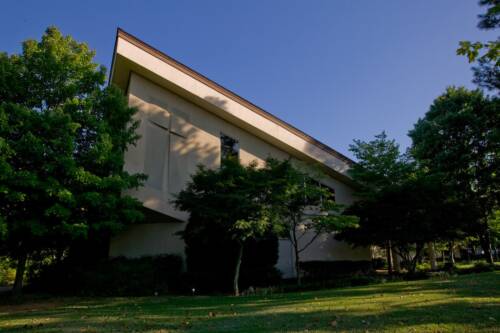 PASTOR/HEAD OF STAFF Covenant Presbyterian Church, Athens, GA
Located in a dynamic college town, Covenant seeks a Pastor/Head of Staff with excellent preaching and administrative skills, a collaborative leadership style, and at least two years’ experience as a full-time solo pastor or head of staff. Covenant members value thought provoking teaching, spiritual development, Christ-like hospitality, social justice, community outreach, and compassionate pastoral care that nurtures individual and community faith. Our ministry team currently includes a Transitional Pastor, Music Director, Handbell Choir Director, Technical Director, Mission/Outreach Coordinator, and small support staff. View our MDP 11243, or visit our website, https://www.covpresathens.org/
Part Time Pastor
Hillsboro Presbyterian Church seeks a part time pastor (30 hours per week). HPC is a welcoming neighborhood church whose motto is “Love Spoken Here”. Information on the position and instructions for applying may be found on our website at: Pastor Search – Hillsboro Presbyterian Church.
 The Presbytery of Genesee Valley (Rochester, NY) seeks a visionary leader as our next Executive Presbyter. This is a full-time position with a 5-year term and the possibility for contract renewal. A full job description can be found at https://pbygenval.org/2024/02/08/executive-presbyter/ and the MDP can be found on https://clc.pcusa.org. Deadline date for applications is April 15, 2024.
Indian Hill Church, in Cincinnati, OH, is seeking a full-time Director of Christian Education position. All resumes and inquiries can be directed to https://ministryarchitects.teamtailor.com/jobs/3586475-indian-hill-church-director-of-christian-education by 05/13/24.
 PRESBYTERIAN CHURCH (U.S.A.) JOB OPPORTUNITIES
The Presbyterian Church (U.S.A.) has several openings for which we are seeking qualified candidates looking for a call working at the national level. The positions include:
Administrative Assistant I
Administrative Services Group
To provide detailed and administrative support to the fulfillment team and Associate Director, Special Offerings.
https://1.adp.com/n4qSWbSMLnp
Finance and Administration Mission Specialist
Presbyterian Mission Agency
The Finance and Administration Mission Specialist will provide financial administration and compliance for the Theology Formation and Evangelism Ministry Area. This position will also support and collaborate with ministry area staff and other departments to meet work role objectives and responsibilities.
https://1.adp.com/i7LgHakALB5
Staff Attorney
Administrative Services Group
Minimize or eliminate legal liability to the Presbyterian Church (U.S.A.), A Corporation, which includes the Presbyterian Mission Agency, Administrative Services Group, and the Office of the General Assembly, and clients of the A Corporation, through review, research and analysis of legal issues, formulation of legal advice and preparation of related documents on a wide range of legal topics within the roles and responsibilities set forth below, in an efficient, cost effective manner and with a sense of urgency that supports ministry and mission.
https://1.adp.com/J5qmeZcyQbR
United Nations Advocacy Associate
Presbyterian Mission Agency
The UN Advocacy Associate works under the supervision of the Manager of the Presbyterian Ministry at the United Nations (PMUN) to advance the Presbyterian Church (U.S.A.) General Assembly advocacy policies and priorities at the United Nations in New York City. This work is done in collaboration with PC(USA) staff, church and global partners, external advocacy partners including UN agencies, diplomats, staff, and civil society. The Advocacy Associate will provide communications, administrative and logistical support for PMUN programs, educational events, and publications.
https://1.adp.com/oJyyc7Qtq6i
Vice President Of Sales & Relationship Management
Presbyterian Investment & Loan Program
Manages the Presbyterian Investment & Loan Program’s sales functions to ensure corporate sales goals for loans and investments are achieved.
https://1.adp.com/P4toXXJmiTw
Senior Director of Theological Education funds Development
Presbyterian Foundation
The Senior Director for Theological Education Funds Development will lead the successful cultivation of and communication with current and potential financial supporters of our Presbyterian Church (USA) Seminaries through gifts and investments to the Theological Education Fund and Theological Schools Endowment Fund utilizing the products, services, and tools of the Presbyterian Church (USA) Foundation and its affiliates. An effective Senior Director will be an experienced collaborative leader in theological education fundraising, and the PC(USA); able to secure gifts and commitments to theological education in the PC(USA); an established relationship builder and proven communicator, with a cultural competence, corporate and ecclesial acumen, and a contagious passion for theological education in general and PC(USA) Seminaries in particular.
https://1.adp.com/qnxD6bG4JrM
Director of Investment Management
Presbyterian Foundation
The Director of Investment Management will be responsible for developing and maintaining strong relationships with donors, investors, and beneficiaries. More specifically, the relationships include: Investment Committee/Board of the Presbyterian Foundation, Large beneficiaries of the Presbyterian Foundation, Endowment Service Clients, Proxy Voting Provider, Creative Investments (Impact Investments), MRTI (Mission Responsibility Through Investment), Creative Engagement and Social Witness Committee and Signatory of the PRI (Principals of Responsible Investment), and under the direction of the SVP of Investment Management the Director of Investment Management will engage the Foundation’s Outsourced Chief Investment Officer.
https://1.adp.com/jfjRzbhfW8s
Apply online at https://workforcenow.adp.com/mascsr/default/mdf/recruitment/recruitment.html?cid=0027dac3-435c-4a88-b8a6-0b7dffde84b5&ccId=19000101_000001&type=JS&lang=en_US
Our faith in God inspires our commitment to the values of diversity, equity, inclusion, and belonging and is grounded in scripture, the Constitution of the Presbyterian Church (U.S.A.), and actions of the General Assembly of the Presbyterian Church (U.S.A.).
Presbyterian Church (U.S.A.) is committed to being not only an Equal Employment Opportunity Employer as defined by the U.S. government, but with the inclusion of gender identity and sexual orientation as well.
Candidates from Presbyterian communities in the global south and other historic Presbyterian Communities of Color, preferably with theological training and fluency in languages other than English, are encouraged to apply.
About Presbyterians Today
Presbyterians Today is the award-winning, general-interest magazine of the Presbyterian Church (U.S.A.). Published 6 times a year, it explores practical issues of faith and life, tells stories of Presbyterians who are living their faith and covers a wide range of church news and activities. Presbyterians Today features easy-to-understand articles about what Presbyterians believe, Bible study and devotional helps, and provocative commentary on the church’s role in society.
Presbyterians Today continues the mission of denominational magazines dating back to the late 1800s. Among these are its immediate predecessors: Presbyterian Survey, Presbyterian Life and A.D.
Statement of purpose
Presbyterians Today seeks to:
- Report in a fair, accurate and balanced way on the activities of the Presbyterian Church (U.S.A.) and of its members, leaders and mission partners.
- Uphold the mission of the Presbyterian Church (U.S.A.).
- Illuminate the faith and heritage that bind Presbyterians together.
- Express the rich diversity within the denomination.
- Challenge readers to grow in their commitment to Jesus Christ as Lord.
- Provide a Christian perspective on contemporary issues.
- Be a source of inspiration, spiritual direction and practical tools for life and ministry.
- Reflect the denomination’s priorities: evangelism, justice, spiritual formation and leadership development.
Presbyterians Today editorial and advertising offices
100 Witherspoon Street
Louisville, KY 40202-1396
Tel. 800-728-7228, ext. 5627 or 502-569-5627
Fax: 502-569-8632
Subscription Services
Presbyterians Today
PO Box 52
Congers, NY 10920
Tel. 800-558-1669
Guidelines for Writers and Photographers
Presbyterians Today, published by the Presbyterian Mission Agency of the Presbyterian Church (U.S.A.), is a national magazine about Presbyterian mission and ministry. It is published 6 times a year. Most readers are loyal, long-time subscribers. While they vary in age, gender, and geographic location, most readers are married, active in their church and community, affluent and well-educated. About a quarter of PT readers are active clergy; the balance are church members.
Presbyterians Today seeks to
- demonstrate the impact of the activities of the Presbyterian Church (U.S.A.) and its members, leaders and mission partners, in a fair, accurate and uplifting way
- use easy-to-understand language free from specialized or technical jargon and acronyms
- uphold and advance the mission of the Presbyterian Church (U.S.A.) and the Presbyterian Mission Agency
- use inclusive and expansive language, making use of bias-free and non-paternalistic terms, balancing female and male references and ensuring that language about God reflects the many images of God available to us through Scripture
- illuminate the faith and heritage that bind Presbyterians together
- through words and images, show respect and equality for the rich diversity (theological perspective, race, ethnicity, ancestry, sex, gender, identity, sexual orientation and mental or physical condition) within the PC(USA)
- challenge readers to grow in their commitment to Jesus Christ as Lord
- provide a Christian perspective on contemporary issues
- serve as an inspiration and resource for life and ministry
- reflect the denomination’s vision, mission and priorities
Feature Articles
Presbyterians Today welcomes contributions from freelance writers. Preferred maximum length is approximately 1,500 words.
Appropriate subjects include
- profiles of interesting Presbyterians and of unique activities or mission projects of Presbyterian members or congregations
- issues of current concern to the church
- how individuals and families express their Christian faith in significant ways or relate their faith to the problems of society
Most articles have some direct relevance to a Presbyterian audience, although Presbyterians Today also seeks well-informed articles that can help individuals and families cope with the stresses of daily living from a Christian perspective.
Fiction, poetry, and reprints are rarely used.
Writers should send a query to the editors (by email, preferably) before sending a manuscript. Unsolicited manuscripts received by post will not be returned unless a stamped, self-addressed envelope is enclosed.
Authors are asked to submit only one article at a time. Manuscripts sent after the editors approve the subject proposed in a query are read by at least two editors, and a reply is given normally within 60 days after receipt.
Presbyterians Today pays for articles upon acceptance of the manuscript. Contracts specify purchase of all rights, including publication on the web.
Presbyterians Today editorial offices
100 Witherspoon Street
Louisville, KY 40202-1396
Email: editor@pcusa.org
Tel. 800-728-7228, ext. 5627 or 502-569-5627
Fax: 502-569-8632
Guidelines for Writers and Photographers
Presbyterians Today, published by the Presbyterian Mission Agency of the Presbyterian Church (U.S.A.), is a national magazine about Presbyterian mission and ministry. It is published 6 times a year. Most readers are loyal, long-time subscribers. While they vary in age, gender, and geographic location, most readers are married, active in their church and community, affluent and well-educated. About a quarter of PT readers are active clergy; the balance are church members.
Presbyterians Today seeks to
- demonstrate the impact of the activities of the Presbyterian Church (U.S.A.) and its members, leaders and mission partners, in a fair, accurate and uplifting way
- use east-to-understand language free from specialized or technical jargon and acronyms
- uphold and advance the mission of the Presbyterian Church (U.S.A.) and the Presbyterian Mission Agency
- use inclusive and expansive language, making use of bias-free and non-paternalistic terms, balancing female and male references and ensuring that language about God reflects the many images of God available to us through Scripture
- illuminate the faith and heritage that bind Presbyterians together
- through words and images, show respect and equality for the rich diversity (theological perspective, race, ethnicity, ancestry, sex, gender, identity, sexual orientation and mental or physical condition) within the PC(USA)
- challenge readers to grow in their commitment to Jesus Christ as Lord
- provide a Christian perspective on contemporary issues
- serve as an inspiration and resource for life and ministry
- reflect the denomination’s vision, mission and priorities
Feature Articles
Presbyterians Today welcomes contributions from freelance writers. Preferred maximum length is approximately 1,500 words.
Appropriate subjects include
- profiles of interesting Presbyterians and of unique activities or mission projects of Presbyterian members or congregations
- issues of current concern to the church
- how individuals and families express their Christian faith in significant ways or relate their faith to the problems of society
Most articles have some direct relevance to a Presbyterian audience, although Presbyterians Today also seeks well-informed articles that can help individuals and families cope with the stresses of daily living from a Christian perspective.
Fiction, poetry, and reprints are rarely used.
Writers should send a query to the editors (by email, preferably) before sending a manuscript. Unsolicited manuscripts received by post will not be returned unless a stamped, self-addressed envelope is enclosed.
Authors are asked to submit only one article at a time. Manuscripts sent after the editors approve the subject proposed in a query are read by at least two editors, and a reply is given normally within 60 days after receipt.
Presbyterians Today pays for articles upon acceptance of the manuscript. Contracts specify purchase of all rights, including publication on the web.
Presbyterians Today editorial offices
100 Witherspoon Street
Louisville, KY 40202-1396
Email: editor@pcusa.org
Tel. 800-728-7228, ext. 5627 or 502-569-5627
Fax: 502-569-8632