
08033
January 11, 2008
Good connection
Seminarians find ‘connectional church’ at the Presbyterian Center
LOUISVILLE — They came. They saw. They connected.

Columbia Theological Seminary students Joan Gandy (left) and Peter Crooke during “Leadership in the Connectional Church” discussion.
Photo by Evan Silverstein
Seven Presbyterian Church (U.S.A.) seminary students — five of whom had never been to the Presbyterian Center previously — spent a week in the denominational offices here Jan. 7-11 as part of “Leadership in the Connectional Church,” in intensive introduction to the mission and ministry of the General Assembly Council, the Office of the General Assembly and the related agencies of the church.
The weeklong for-credit course is led by Garnett Foster of Louisville Presbyterian Theological Seminary (LPTS) and the Rev. Lee Hinson-Hasty, the General Assembly Council’s coordinator for theological education, in cooperation with the other PC(USA) seminaries
“Through the years I have expected the Presbyterian Center to be a place of bureaucracy,” Joan Gandy, a Mississippian attending Columbia Theological Seminary (CTS), told the Presbyterian News Service in a Jan. 10 interview. “I don’t know why but I’d never thought of theological creativity, but this week I’ve found it all over.”

Louisville Presbyterian Theological Seminary students Stephanie Sorge (left) and Karen Russell listen intently to a conversation during “Leadership in the Connectional Church.”
Photo by Evan Silverstein
Karen Russell, a student at Louisville Presbyterian Theological Seminary (LPTS), expressed surprise at the range of ministries present in the denominational offices. “I don’t think we’ve brought up a single issue that someone isn’t working on,” she marveled. “And people here see themselves as resources to congregations, not as oracles on high.”
CTS student Peter Crooke said he’s impressed with the commitment of PC(USA) national staff members. “I’m still frustrated by some things, but I’m leaving here hopeful because everyone here is working for the Kingdom of God.
“It’s inspiring how passionate staff are about God’s mission,” he added. “We’ve learned so much about mission and staff are participating in it because they’re passionate, not because it’s their job.”
Group members said they spent considerable time discussing the same subject that many national staffers grapple with daily: how to better make known to PC(USA) congregations the resources that are available to them.
“The amount and quality of resources that are available is amazing and refreshing,” said CTS student Emily Nisbet. “And they’re for all sorts of churches, ages, walks of life — but how do they get from the Presbyterian Center to the 11,000 congregations? We’ve been talking about that alot…”

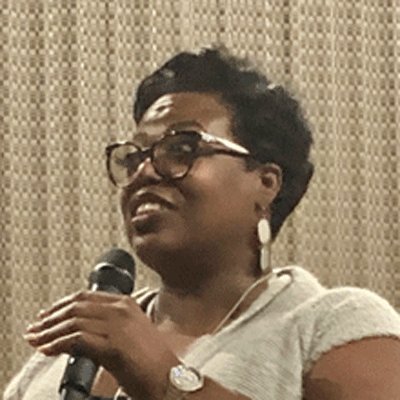
Columbia Theological Seminary student Meghan Brown talks about her experience at “Leadership in the Connectional Church.”
Meghan Brown, also from CTS, attributed the disconnection to “a culture of individualism that churches have unfortunately fallen prey to.” Though Presbyterian theology is thoroughly connectional, she said, “congregations fail to realize the strength they have in relatedness. Connections don’t happen nearly often enough.”
Making those connections with national staff members was the best part of their week, the students agreed. “It’s all relational,” Russell said, “so matching names with faces has been invaluable. This kind of experience ought to be required for ordination and for continuing education for pastors.”
“We joke about how scary it is as candidates to go before our presbyteries,”said CTS student Jenny Sumner, “so coming to the Presbyterian Center was kind of daunting. But the people here are so intent on saying ‘yes’ instead of ‘no’ and are so pastoral in their approach their ministry.”

Columbia Theological Seminary students Jenny Sumner (left) and Emily Nisbet, two participants in “Leadership in the Connectional Church,” Jan. 7-11 at the Presbyterian Center in Louisville. Photo by Evan Silverstein
The group clearly understood the transition that’s going on here as structures and priorities change, but LPTS student Stephanie Sorge was impressed with the commitment of national staff members.
“We Presbyterians are going through a lot of growing pains, in both congregations and the denomination as a whole,” she said. “I’ve been really encouraged by the commitment of the people here to discern the future while undergoing tremendous change.”
Sumner agreed. “Americans are so addicted to drama,” she said, “but the Presbyterian Church is not on ‘pause’ — there is so much more going on than anyone can imagine.” |