PC NEWS - Presbyterian News Service
PC (USA) Seal PC(USA) Homepage


08063
January 28, 2008

Twin Cities presbytery restores Capetz’ ordination

Openly gay man set aside ordination in 2000 to protest G-6.0106b

by Duane Sweep
Presbyterian News Service

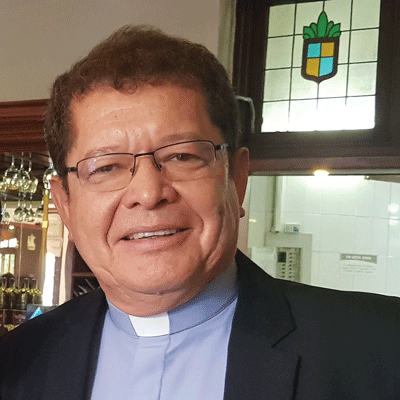
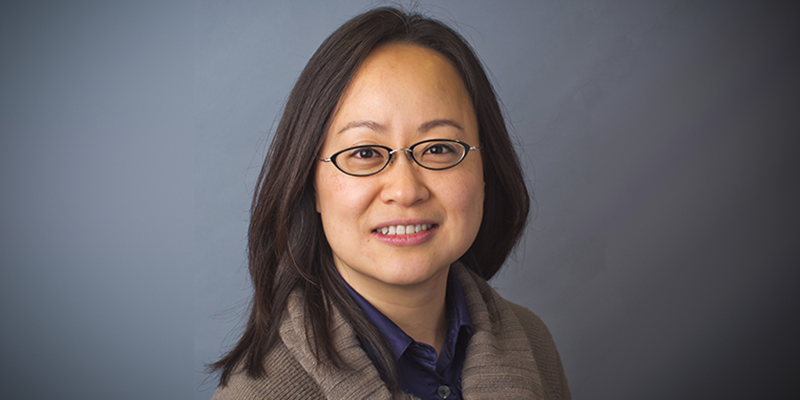
Photo of Paul Capetz
Paul Capetz

MINNEAPOLIS — The Presbytery of the Twin Cities Area voted Jan. 26 to restore the ordination of Paul Capetz, an openly gay man, as minister of word and sacrament.

Capetz had laid aside his ordination in 2000 in response to the 1997 addition of G-6.0106b to the Presbyterian Church (U.S.A.)’s Book of Order.  The section requires ordained church officers to practice “fidelity within the covenant of marriage between a man and woman or chastity in singleness.”

In asking the presbytery to restore his ordination, Capetz declared a principled objection or “scruple,” noting that he could not affirm G-6.0106b, and cited the 2006 General Assembly’s authoritative interpretation of The Book of Order section G-6.0108 that allows candidates to raise principled objections and reaffirms the presbytery’s responsibility to determine fitness of candidates.

Capetz claimed the fidelity and chastity amendment makes it necessary for homosexuals to take a “vow of celibacy” if they seek or hold ordained office. Capetz said such a vow is inappropriate because one’s sexuality is “inescapable” and that the vow creates a “false kind of works righteousness.”

In two separate votes, the presbytery determined that Capetz’s declared departure from ordination standards regarding sexual practice did not constitute a failure to adhere to the essentials of reformed faith and polity, and then restored Capetz to the exercise of the ordained office of minister of word and sacrament.

The first motion passed 197 to 84 with two abstentions and the second passed 196 to 79 with three abstentions.

The votes took place late in the afternoon of a day-long special meeting of the presbytery at Christ Presbyterian Church in Edina, MN, a Minneapolis suburb. The meeting, called to consider the single issue of Capetz’ ordination, included a discernment process in the morning led by the Rev. Vicky Curtiss, who had been a member of the Theological Task Force on the Peace, Unity and Purity of the Church (PUP), which proposed the controversial authoritative interpretation, which was adopted by the Assembly with one crucial amendment. That task force encouraged governing bodies to use a discernment process when considering matters of substantially divergent opinions.

The presbytery voted 140 to 118 to go into executive session for the discernment process, essentially closing that part of the meeting to visitors and the media. The discernment process took place around tables in the church’s fellowship hall.

The presbytery later opened the proceedings for a statement from Capetz, following which Capetz took questions from the floor.

In his presentation, Capetz said he “grew up in the church,” noting, “From earliest childhood through my teen-age years to young adulthood, the church provided the framework within which I came to know myself as a child of God.”

His call to the ministry came through a “campfire sermon” that he said “deeply affected my sense of call.” That sermon was based on the story from John’s gospel where Jesus asks Peter if he loves him and then ultimately tells Peter to feed his sheep.

“That night is was as though Jesus had posed the question directly to me,” Capetz said. “In responding affirmatively to that call, I had found the direction for my life.”

He attended the University of California at Los Angeles, Yale Divinity School and the University of Chicago Divinity School, and was ordained in 1991 in the Chicago Presbytery.

His fist call took him to Union Theological Seminary in Virginia where he taught reformed theology. However, after one year at UTS, Capetz said he left when “attempts were made to revoke [the call] on the grounds that I was a gay man.”

He has spent the past 15 years as associate professor of reformed theology at United Theological Seminary of the Twin Cities, New Brighton, Minn. United has a non-discrimination policy with respect to those who are gay.

Capetz strongly disagrees with the position of the Presbyterian Church (U.S.A.) regarding the ordination of homosexuals. He said, “I have never heard a sermon that offered wisdom as to how a gay man should live his life in a faithful Christian manner. All I have heard is silence, or when there was something other than silence, the words have been condemning.”

Describing the church’s current position, Capetz said, “In its categorical opposition to all expressions of homosexuality, the Protestant church has unintentionally found itself having to deny one of its own essential tenets, namely that vows of celibacy are wrong because they imply works-righteousness before God.”

He added, too, that the denomination’s ordination standards on sexual practice “would not in fact be a vow of celibacy for gay people if the church recognized the validity of marriage between two men or two women.” He added, “If that were the case, I would have no difficulty abiding by the standard of chastity in singles and fidelity in marriage.”

Capetz took several questions from the floor, noting on several occasions that he would not take a vow of celibacy. When asked to elaborate on his view of the works of Martin Luther and John Calvin, Capetz cited justification by faith alone and not by works, noting that sexuality is an “inescapable” part of humanity. Demanding celibacy is “kind of works righteousness,” he said.

When asked if he would marry a man, Capetz said, “I would avail myself” to the possibility.

When questioned if his departure from the chastity and fidelity section would be in both belief and in practice, Capetz said, “I refuse to be in compliance with The Book of Order as it now stands.”

Capetz also pointed out that the specific section – G-6.0106b – was not in The Book of Order when he was originally ordained. He also noted that he struggled with his ordination after the measure passed, and he considered leaving the denomination.

But he decided to remain Presbyterian. He said, “I do believe God was calling me to make that particular decision.”

After another executive session for discernment, closed to visitors and members of the media, presbytery commissioners broke for lunch before resuming for an open debate in the church sanctuary before voting. The afternoon session opened with worship and communion for both commissioners, who numbered nearly 300, and approximately 40 visitors.

During the afternoon session, the presbytery accepted the minority report from the committee on ministry that sought a negative response to Capetz’ request for restoration of ordination. The minority report was not submitted as a motion to prevent a second debate on the issue of departure and restoration.

The minority report noted, in part, “We believe that the restoration of ordination to an individual intending to depart in practice from a clearly stated constitutional standard essentially allows the will of the [presbytery] to supersede the Constitution of the Presbyterian Church (U.S.A.).”

That argument reflects the Assembly’s amendment to the authoritative interpretation, which requires ordaining bodies, when considering a candidate’s “departure” to determine “whether the (ordination) examination and ordination and installation decision comply with the constitution of the PC(USA).”

On that basis, an appeal of the presbytery’s decision to restore Capetz’ ordination, seems likely in the church courts. At a recent meeting of San Francisco Presbytery, candidate Lisa Larges — an open lesbian — also declared a scruple to G-6.0106b and the presbytery voted to allow her candidacy (but not ordination yet) to continue. Opponents of that decision immediately announce their intention to appeal.

The Twin Cities Area Presbytery minority also noted, “Furthermore, we are uncomfortable with the hermeneutical or interpretive gymnastics required to provide biblical sanction for sexually intimate same sex relationships.”

Following the votes on the first two motions, the presbytery also validated, on voice vote, Capetz’ service as an associate professor at United Theological Seminary.

Capetz has no particular plans now that his ordination has been restored. “I can’t anticipate what subtle differences it might have for me,” he said.

The process, he said, “reminded me how much respect I have for Presbyterian polity.”

The Rev. Sarai Schnucker, interim executive presbyter of the Twin Cities Area, said, “We are overwhelmed by the grace and love that this presbytery exhibited today. The members of the presbytery have conducted themselves with respect and restraint, even while handling such a controversial issue. As a presbytery, we listened to each other and heard each other. In the midst of this time of debate and discernment, there was true worship by the body of Christ as we sang songs and broke bread together.”

The Rev. Deb Kielsmeier, a signatory to the minority report, added, “We [members of the presbytery] care about each other even if we have disagreements.”

Capetz said, “I’m not elated, but I wouldn’t have been dejected” if the vote had gone the other way. “I think I’m tired more than anything.”

He had pointed out during his earlier presentation that the day’s decision was relatively minor in his case, but that it had broader ramifications. “What is of ultimate significance, however, is whether the Christian church will ever have anything other than a counsel of despair to offer to all those gay persons who grow up in its midst or who would gladly turn to it for spiritual and moral wisdom.”

Duane Sweep is communications director for the Synod of Lakes and Prairies.


PC(USA) Home (Link)
     
  subnavigation divider  


  subnavigation divider  
   
  subnavigation divider  
   
  subnavigation divider  
     
  PC News - feature button  


  Link to Top of Page  
 
Contact PC(USA)