Presbyterian Advocacy Hour sheds light on community organizing
Speakers share real-life examples of using people power to make a difference

LOUISVILLE — About 200 people flocked to the Presbyterian Advocacy Hour on Wednesday to learn about community organizing, the latest topic in the popular online series hosted by the Presbyterian Office of Public Witness in partnership with other social justice-oriented ministries.
“Organizing for Change: Mobilizing Your Community” featured four speakers discussing aspects of congregation-based community organizing (CBCO), which promotional material touted as “a powerful approach to advocacy rooted in relationships, shared values, and real-world impact.”

Speakers included the Rev. Matthew Johnson, Georgia organizing manager for Faith in Public Life, who discussed the importance of taking the narrative back and having bigger impact during a time when vulnerable groups, such as immigrants and members of the LGBTQIA+ community, are being targeted.
“When we're able to organize locally and … coordinate with each other as people of conscience and faith, we're better able to affect state legislative races, we’re better able to affect our local school boards and also to build power, and that is the work that I think it is incumbent for us to look at logistically,” said Johnson, an ordained Baptist minister.
Participants in the online meeting also heard from:
- The Rev. Dr. Sue Coller, pastor of First Presbyterian Church of Lincoln, Nebraska, and an organizer with Justice in Action, a grassroots coalition tackling local issues.
- The Rev. David Lewicki, pastor at North Decatur Presbyterian Church in Georgia and part of the leadership team of Presbyterians for a Better Georgia.
- The Rev. Phil Tom, a faith leader with a background in urban ministry and CBCO work.
The Rev. Dr. Alonzo Johnson, who leads the Presbyterian Committee on the Self-Development of People, offered spiritual grounding and prayer before Tom gave a historical summary of CBCO work, which he traced back to the 1930s. Tom also noted that the Presbyterian Church (U.S.A.) has been a longtime supporter of community organizing for many years.
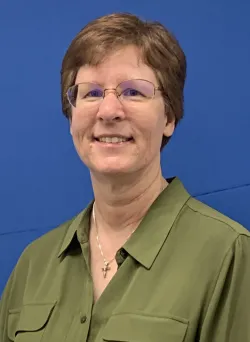
Coller described how Justice in Action got started, how it operates and why she felt it was needed. (Learn more in a previous story.)
Though First Presbyterian Church had been active in many compassionate endeavors, such as the distribution of food and coats, Coller said, “it always felt to me like we were putting a Band-Aid on the needs. We were meeting immediate needs, which are important, but wouldn't it be nice if we could address the underlying issues so that we did not need food pantries and clothing distribution centers and the like?”
Justice in Action gave area congregations a way to combine forces to make progress on key topics, such as mental health access and low-income housing needs.
The group’s work is rooted in the biblical story in Nehemiah 5. “The exiles had returned from Babylon to Jerusalem, and Nehemiah finds everybody in the midst of a famine, buried under debt, because, not unlike today, leaders capitalize on people's desperation, and they charged extraordinarily high interest on the loans that people needed to survive,” Coller said.
The people came together, and the leaders — after being publicly called out — “promised to abandon their practices of usury and to return all they had taken unjustly,” Coller said, adding “one of the things we learned from that is don't underestimate the power of organized people.”
Methods used by Justice in Action include an annual Nehemiah Action Assembly where local officials are invited to demonstrate broad public support for solutions to community problems. “We have over 1,000 people show up at those assemblies,” Coller said, and if necessary, “we continue our action to try to put pressure on our leaders to do the right thing.”
On the other side of the country, Presbyterians for a Better Georgia focuses on organizing congregations to change policy at the state level.

Lewicki described it as a partnership of Presbyterians advocating “for public policies that make Georgians safer, healthier and more secure.”
“We employ a lobbyist as our only staff person … but we also do lots of education and training with our congregations and individual members, so that they know what's going on at the state house, and they know how the laws that are being made there affect their communities,” Lewicki said.
The group and its dues-paying congregations put their energy into issues such as access to health care and eradication of homelessness, with a focus on long-term results.
At one of its signature events, people gather at Central Presbyterian Church, across the street from the State Capitol in Atlanta, to go over bills of interest, and “we practice what we're going to do that morning when we go talk to our legislators, so people get a chance to laugh and make mistakes and … get rid of their jitters” before walking across the street to chat with the legislators, Lewicki said. “We have some of the most marvelous conversations in that moment. We had 80 people down there at the State Capitol this year representing more than 20 congregations.”
Lewicki said he would love to see Presbyterians for a Better Georgia replicated in other states. Presbyterians “have amazing access to people in power, and we can make a big difference.”
The next episode of the Presbyterian Advocacy Hour will focus on environmental issues. It will be noon (Eastern) September 27. For more information about the web series or to register, go here.
You may freely reuse and distribute this article in its entirety for non-commercial purposes in any medium. Please include author attribution, photography credits, and a link to the original article. This work is licensed under a Creative Commons Attribution-NonCommercial-NoDeratives 4.0 International License.