“My father started a business cutting pine trees for paper. He did well with that until racism destroyed it. The banks told him overnight you can't get any more money.”
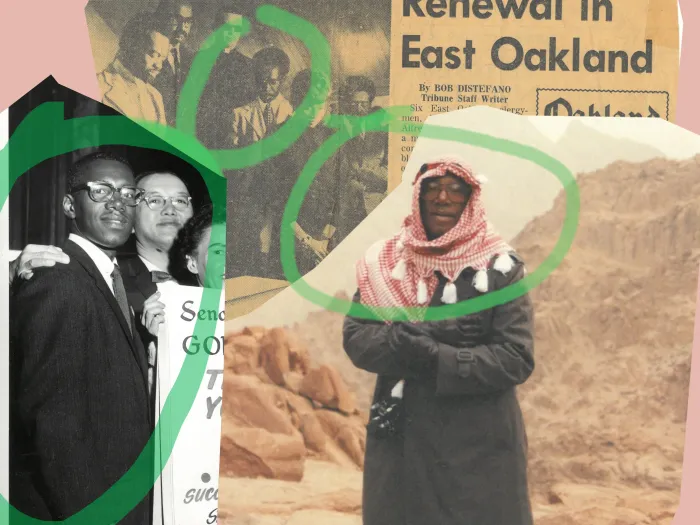
In 1981, Gene Turner, self-described Presbyterian bureaucrat, former executive of the Synod of the Golden Gate and the Synod of the Northeast, was interviewed by Charles Quirk, part of a series on the UPCUSA and racism. In 2025, David Staniunas interviewed Gene at his home outside Syracuse, New York. The passage of forty years in places sharpened and elsewhere completely changed Gene’s responses.

Gene was born in Macon, Georgia in 1934, and was educated at Knoxville College and Pittsburgh Theological Seminary. His earliest pastoral work was in Friendship Community Presbyterian Church in Pittsburgh, an intentionally interracial church in the shadow of the University of Pittsburgh, in a portion of the Hill District recently cleared by urban renewal and rechristened Terrace Village. Gene’s work, alongside future moderator of the UPCUSA Ganse Little, was to develop the church’s youth fellowships.

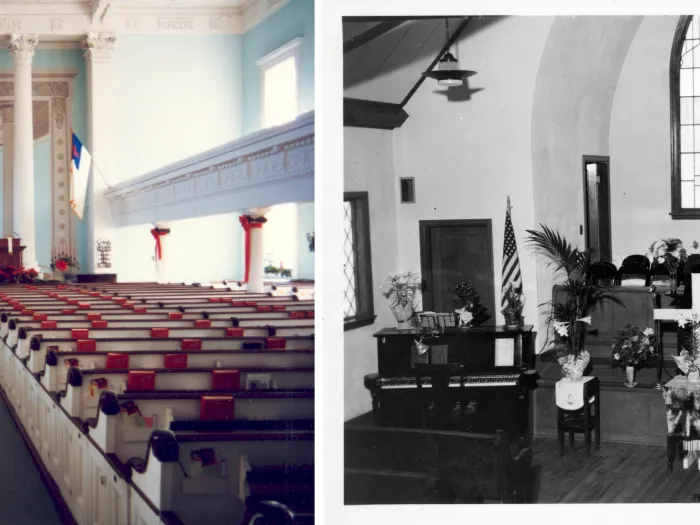
From 1963 to 1968 he was regional coordinator for Philadelphia as part of the UPCUSA Department of the Urban Church. Deployed to the presbytery offices for the first time, as he described it in 1981, “I had no desk, no telephone, no secretary.” His role was to serve as an advocate for the residents of Philadelphia’s Mill Creek Homes, helping to connect residents of Louis Kahn’s public housing “acropolis” with social services, and to shepherd them into the nearby Reeve Memorial Presbyterian Church. Gene described the dynamic: “The people I was serving had a negative view of Reeve Memorial Church. It was a middle-class church. Reeve was not going to receive those people. Racism created a classism, and Black people, I think sometimes, unconsciously, bought into that social system.”
Gene served as executive in the UPCUSA Synod of the Golden Gate in 1970 and 1971 as the Synod, responding to a request from St. Andrew Presbyterian Church in Marin City, sought support from the national agency offices for the legal defense of Black Power activist Angela Davis.
In 1981, Gene was asked about successes and failures of the denomination in responding to the social upheavals of the 1960s and 1970s. He identified support of the Angela Davis legal defense as “not what the denomination accepts as success” adding “The denomination to this day doesn't appreciate the expression and the exhibition of the gospel inherent in that move and in that grant. And probably when I'm dead and gone and all of my associates are dead and gone, the historians will say that that was a great day in the life of the United Presbyterian Church.”

Gene left the west coast to serve as the first executive of the newly-organized Synod of the Northeast, supporting congregations and presbyteries in New Jersey, New York, and New England. In 1981, he described the challenges of aligning the Synod’s 1200 congregations in just and liberated worship, saying “Worship is not worship when you have all white people leading it, especially all white males. And white women have joined with Black women and racial and ethnic people to say the same thing. And in a sense I know that hurts some people, some white people, to know that we reject that as the true worship. And a Presbytery has to deal with that. They cannot have worship and have all white male leadership.”
It was through bureaucratic work – convening meetings, taking minutes, keeping correspondence, which are all ways of gathering human input – that the barriers to true community would, at least in part, be overcome. In 2025, he described Presbyterian bureaucratic work as a calling – the art of transforming groups into communities.
That nous for relationships carried into his post-Synod career. In 1993 Gene began work as the PC(USA) Associate Stated Clerk for Governing Bodies, Ecumenical Agencies and Relationships, serving as liaison to the National Council of the Churches of Christ in the U.S.A., the World Council of Churches, and other ecumenical groups, traveling to Yaoundé, Geneva, and Rome. After retirement, beginning in 2009, Gene was part of the General Assembly's Special Committee on the Belhar Confession – another text dedicated to transforming merely assembled people into communions.
Learn more
Gene Turner and J. Oscar McCloud, The Angela Davis Legal Defense 50 Years On (2021)
Gene Turner papers, ARCHIVES 18-1037
You may freely reuse and distribute this article in its entirety for non-commercial purposes in any medium. Please include author attribution, photography credits, and a link to the original article. This work is licensed under a Creative Commons Attribution-NonCommercial-NoDeratives 4.0 International License.