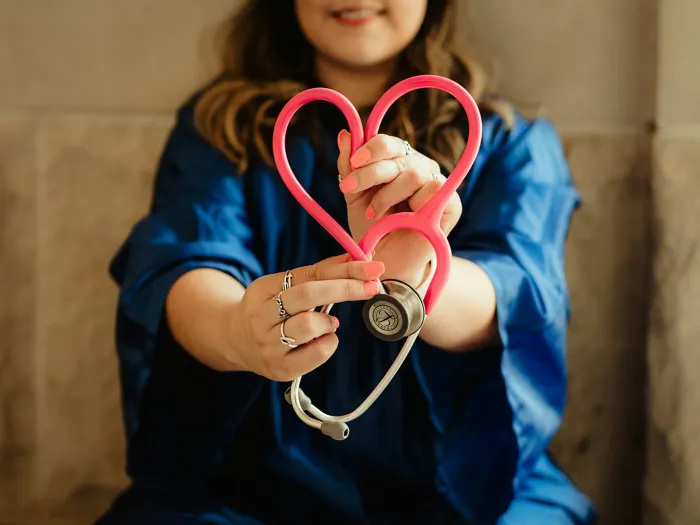
A PDA partnership is helping to bring health care and women's empowerment to remote communities in Pakistan
Mobile health units make positive impact through partnership with Community World Service Asia

LOUISVILLE — Women and children living in remote areas of Pakistan are receiving much-needed medical care thanks to a partnership between Community World Service Asia (CWSA) and Presbyterian Disaster Assistance.
PDA is helping to fund two health care vans that go into remote villages where residents would otherwise have difficulty receiving care because they live far away from medical facilities or come from segments of society that are systemically oppressed.

"The current project that PDA is supporting is providing essential preventative and curative health services through mobile health units to drought affected communities in Umerkot, which is in southern Pakistan," said Shama Mall, a deputy regional director for CWSA. “We prioritize women and children.”
Among the people in the area, “there's a huge presence of religious minorities who are quite vulnerable, who are socially, politically and economically isolated and marginalized, and they don't have access to health care very easily because of the context that they're living in," she said.
Access challenges have contributed to poor health outcomes, with past outbreaks of diseases such as diphtheria, measles and malaria leading to fatalities among infants and children, according to CWSA.
The crews that accompany the mobile health vans are addressing the people’s needs by providing health care in a dignified way and while braving difficult conditions to reach patients.
“I've been on some of these routes, and I'm always awestruck how dedicated and committed these teams are, that they would do this every day,” Mall said. “You leave in the morning at 9 and you come back at 4 o'clock, traveling bumpy, bumpy roads, dusty roads, no facilities, no bathrooms, nothing to eat, so just parking remotely.”

The team includes a medical health officer and health visitor, who are both women; a medical technician; and two community mobilizers.
Having a doctor who is a woman is important because “it's more culturally acceptable, and women then don't feel hesitation in sharing their problems or getting a checkup done,” Mall said.
The mobile units are used on a routine basis but also have been useful during disasters, such as flooding in 2022, a time when many people were displaced and “a lot of the government health facilities were destroyed or not functional,” Mall said.
When a mobile unit arrives in a given village, patients already are waiting for the staff and eager to receive treatment and free medication. The units are stocked with everything that’s needed, including testing kits for common ailments such as malaria.
“We can immediately tell if they have malaria and put them on a treatment plan,” said Mall, who was visiting the Presbyterian Center in Louisville, Kentucky. “Malaria is life threatening if it's not treated, and other diseases as well, (such as) respiratory diseases, and if people are already malnourished, then even small diseases have a significant impact on their health.”
Life can be tough in these areas, especially for women, Mall said. “They do all the household chores. They look after all the livestock. They work on the agricultural produce, on the lands. … If they're not healthy, it's very difficult for them to cope.”

Because of cultural norms, women cannot go alone to medical facilities and families would lose income if they took time away to travel to distant ones, Mall explained. "Patients from religious minority communities, including those from tribal or caste-based backgrounds, may encounter social barriers that affect their access to conventional healthcare services."
The mobile units are able to serve up to 100 patients per day and also provide education on topics such as health, hygiene, diarrhea, scabies, hepatitis and family planning. Additionally, the team actively engages communities by celebrating national and international health days to further promote public health awareness.

In addition to assisting the women, the team strives to educate the men, which is important because men make all the family decisions, Mall said. “The buy-in has to come from there. It's very important to change their mindset around some of these issues and also (to) educate them on the importance of health care for women," especially those in need of prenatal or postnatal care.
Traditionally, "women's health care needs may receive less attention, partly due to prevailing gender norms that can limit their social status and access to services," Mall explained. When a unit arrives, personnel can subtly “challenge some of the cultural notions that they hold about women."

The staff also passes along practical tips for taking care of ailments at home. For example, a patient with soreness in her feet was advised that soaking them in salted water might help.
Another practice that's emphasized is breastfeeding. During an awareness week, positive messages around breastfeeding were shared and common myths were countered.
“Women were able to themselves celebrate it and share messages around it, and they shared with us that they have never been involved in something like that," Mall said. "So I think the critical thing is that it gives voice to women … to advocate on their needs.”
Presbyterian Disaster Assistance is one of the Compassion, Peace and Justice ministries of the Interim Unified Agency of the Presbyterian Church (U.S.A.). It is a longtime partner of Community World Service Asia, which is a humanitarian, development, advocacy and capacity enhancement organization doing work in Pakistan, the Middle East, and the Asia Pacific Region. Learn more here.
You may freely reuse and distribute this article in its entirety for non-commercial purposes in any medium. Please include author attribution, photography credits, and a link to the original article. This work is licensed under a Creative Commons Attribution-NonCommercial-NoDeratives 4.0 International License.