Haitian pastors in Ohio and many others face deportation with end of Temporary Protective Status
The Trump administration terminated TPS for both Haiti and Syria this summer

In Springfield, Ohio, the air is thick with fear and unrest. The Department of Homeland Security has ended Temporary Protected Status for both Haiti and Syria, and Springfield’s 10,000-15,000 Haitian residents are braced for the fallout. Businesses sit empty and closed. Individuals attend immigration appointments where they are fitted with ankle monitors. Others, including two local Haitian pastors, have been detained. Two weeks ago, a 20-year-old college student from the area walked into traffic and was killed in what his family says was a suicide stemming from the loss of TPS.

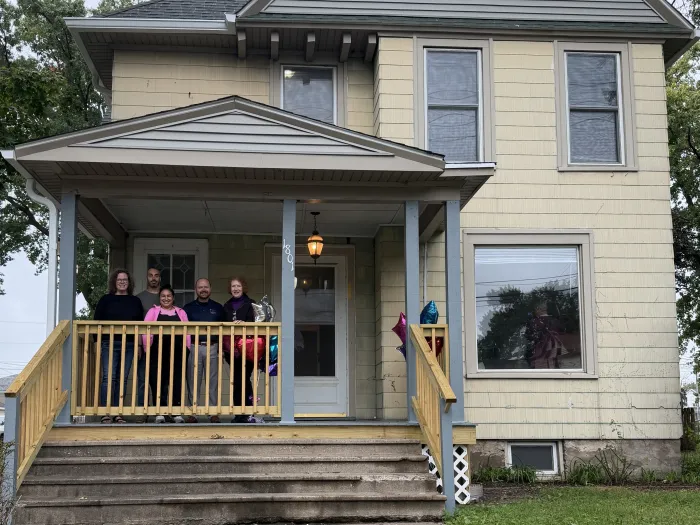
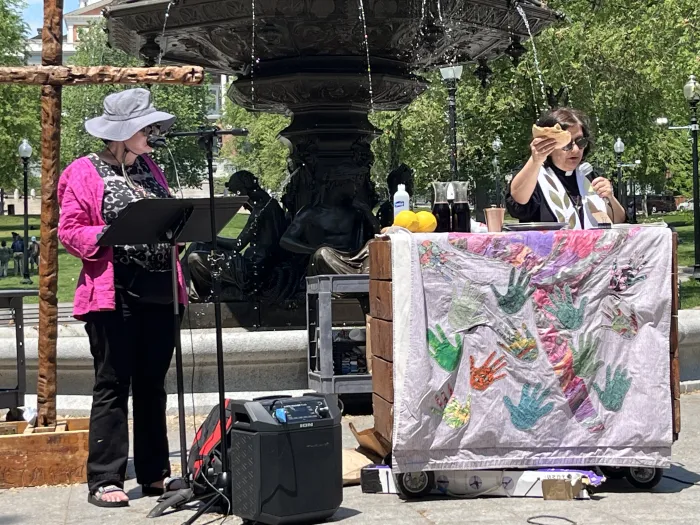
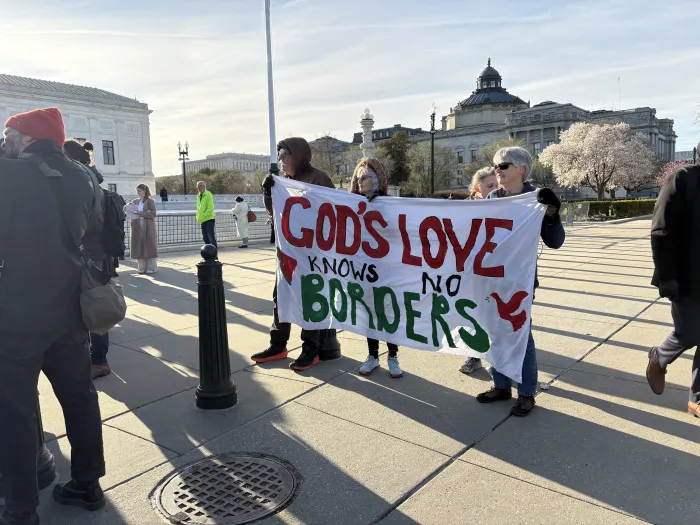
Activists, including the local faith-based organization G92, have been organizing in support of Haitians, providing accompaniment and protection to those directly impacted, as well as holding vigils and making phone calls to political representatives advocating for due process.
A PC(USA) pastor, the Rev. Kazy Hinds, and her husband, the Rev. Joe Hinds, serve congregations near Springfield and are involved with G92’s efforts. Recently, Kazy Hinds spent two full days taking people to their immigration appointments, where they were forced to choose between an ankle monitor or detainment. She became close to a woman whose sister had been raped and killed by gang members in Haiti and who had come to the United States to escape such violence. Hinds sat with the woman as she received her ankle monitor.
“She had dressed herself up and was trying to put forth the best that she could, and was extremely scared,” Hinds said, adding that she and the woman were communicating through a translation app on their phones. “I literally was sitting there just holding her as she was crying after the appointment. Because here’s this beautiful Haitian woman, dressed to the nines, with an ankle monitor that she can’t cover up because she has a dress on.”
Haitians in Springfield seem particularly shaken by the detainment of two community pastors, the Revs. Adrien and Dumanom. Adrien was picked up by ICE while getting gas with his wife. He has not lived in Haiti for more than 20 years and has worked for Ohio employers and filed federal taxes since 2021. He is a faith leader with deep roots in the community.
“This is the reality of all these people that they’re picking up— at least the ones I’ve been working with — is they’re not doing anything wrong,” Hinds said. “They’re doing everything that they can to be a law-abiding citizen.”
Temporary Protected Status was created by Congress in 1990 to prevent the deportation of citizens to countries experiencing conditions that make safe return impossible. TPS allows recipients to live and work in the United States, but it does not offer an independent pathway to permanent residency or citizenship. Haiti was granted TPS after the country was decimated by an earthquake in 2010, and the status has been extended or redesignated ever since due to ongoing issues of safety and unrest.
DHS claims that the conditions that warranted TPS no longer apply to Haiti. TPS advocates vehemently disagree, pointing to significant governmental instability and the prevalence of gang control over large swaths of the country. Haiti’s TPS ended July 27, after the U.S. Supreme Court cleared the way for the administration’s termination. More than 300,000 Haitians were affected.
Springfield is notable for its particularly high Haitian population and the unique way the community developed. The small post-industrial city endured decades of economic depression and population loss, which led to a combination of inexpensive housing and a labor shortage. Haitian workers flocked to the city, leading to a rapid increase in the city’s population.
In 2024, Springfield became a national immigration flashpoint after Trump amplified false claims that Haitian residents were eating pets, which in turn led to threats and harassment toward the community.

G92 formed to advocate for and with Haitians, citing biblical calls to care for and welcome the stranger. Earlier this year, they mobilized faith leaders to pray and call for an extension of Haiti’s TPS. More recently, the organization has shifted its efforts from preventing TPS termination to accompanying people living through it. G92 emphasizes that their actions are guided directly by what Haitian community leaders ask for.
Like Hinds, the Rev. Joel Esala, who serves Covenant Presbyterian Church in Columbus, also traveled to Springfield at the end of August to help make phone calls and provide pastoral care to Haitians detained at the Butler County Jail. For Esala, it was crucial that Haitians were asking for the support.
“I am keenly attuned to when the church is asked by communities to show up in solidarity,” he said. “That’s a sacred, sacred invitation.”
He first joined G92 efforts in Springfield back in January at a meeting to which so many people showed up, the Fire Department had to make people leave. Esala was struck by the massive number of people who showed up, including folks from many different Christian denominations as well as Muslims and Jews — and also by all those who couldn’t be there.
“In a time when, like everything else in our world, the church is so divided, to see such a diverse group of people standing together in solidarity is so heartening," Esala said.
Esala serves a “purple” or politically diverse congregation, and says he is committed to helping people care for others with nuance and compassion. Hinds serves a rural, largely conservative congregation who, she says, are learning to see other peoples’ experiences through what she shares with them through preaching and teaching.
The PC(USA) has long-standing policies in support of migrants and refugees. Earlier this year the Presbyterian Hunger Program and other ministries advocated for the extension of Haitian TPS. Currently, the Office of Public Witness has put out an action alert asking people to urge the Senate to vote in favor of protections for Haitians and a redesignation of TPS.
Esala said his experiences in Springfield really showed him how crucial these efforts are.
“There’s a woman there that I met who is a U.S. citizen now, so she’s presumably not in danger … and felt the safety to be present in that room,” Esala said. “But she’s livestreaming to all these people who feel completely alone, wondering ‘does anybody even care?’”
For Hinds and Esala, and for the PC(USA) as a denomination, the answer is a resounding “yes,” As long as people as still asking, there is still work to do.
You may freely reuse and distribute this article in its entirety for non-commercial purposes in any medium. Please include author attribution, photography credits, and a link to the original article. This work is licensed under a Creative Commons Attribution-NonCommercial-NoDeratives 4.0 International License.