
Special committee works on drafting new confession
Committee members said the in-person meeting was a turning point in their work ahead of the 227th General Assembly in 2026

In 2022, the 225th General Assembly of the Presbyterian Church (U.S.A.) approved an overture from the Presbytery of Arkansas calling for the formation of “a special committee to write a new confession for the PC(USA) to be considered for inclusion in the Book of Confessions” (TWE-08). Committee members have been quietly and steadfastly pursuing the mandate they were given for the last year and a half, and recently convened for several days in Louisville, Kentucky, to move forward in producing a draft confession to be considered by the 227th General Assembly next year.
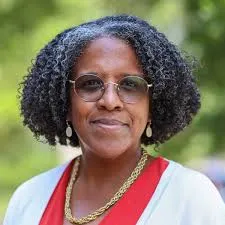
The committee consists of 16 at-large members from presbyteries across the country who were appointed by the co-moderators of the 225th General Assembly, the Rev. Shavon Starling-Louis and the Rev. Ruth Faith Santana-Grace. It is intentionally diverse, consisting of teaching elders, ruling elders, and church members of various backgrounds and identities. One committee member, Byungil Kim, speaks Korean, with simultaneous interpretation technology allowing him and the rest of the group to communicate with one another. The group is co-moderated by teaching elders, Dr. Edwin Aponte and Dr. Margaret Aymer, who respectively serve as dean of Drew Theological School and academic dean of Austin Presbyterian Theological Seminary.

The committee was tasked with drafting a new confession that contends with the intersection of faith and the contemporary challenges facing the church and the world, with the committee's draft to be considered by the 227th General Assembly for possible inclusion in the Book of Confessions. In accordance with TWE-08 and two other overtures brought before the 225th Assembly, the committee was directed to consider the destructive impact of racism, white supremacy, and colonialism, while affirming unity and diversity in the church and the image of God in all people and rejecting oppression in all its forms.
“The writing of a confession that speaks of the intersection of our faith with the challenges of contemporary culture is one of the most important tasks to which a church is called,” said the Co-Moderators of the 225th assembly. “We are grateful for these saints who will put their hearts and pen to paper in an effort to offer words reflecting those values for a time such as this.”
The first in-person meeting of the committee took place in Austin, Texas, in December 2023, during which committee members worked to establish a shared understanding of their mandate. In the 20 months since, they have continued to meet virtually, with a second in-person gathering taking place in March. Much of their work during that time has been wrestling with “what in this moment constitutes a status confessionis (Latin for 'confessional status' but also with a broader sense of making a clear statement of faith for a particular time and context).”
The discussions have been rich and expansive, but also intentional and slow by necessity. The committee has divided itself into subcommittees several times throughout the process, ranging in focus from theological questions to communication strategy. As the subcommittees have evolved, the make-up of committee members has also intentionally shuffled, allowing various voices to be in conversation with one another.
When the full committee gathered together at the Presbyterian Center in Louisville, Kentucky, last month, the subcommittees brought their work to be considered by everyone, and the committee worked to compile the various components into one cohesive document. Together, the group identified that, historically, the confessions taken up by the church have each sought to address — in their own contexts — where the truth of the Gospel was at risk. Following in this tradition, the committee prayerfully considered what is the central threat to the Gospel at this moment and came up with a clear answer.
“It is the heretical worship of power and money, and its concentration among the few, and idolatry that equates money and power with the divine and the will of God. Maintaining this concentration of power and money requires the domination of others. Systems of oppression are upheld by lies, by othering, and through persecution and violence aimed at producing fear and disempowerment.”
The Rev. Jeniffer Rodriguez, a committee member who currently leads the communications subcommittee, said that after the group agreed on this articulation of the modern threat to the Gospel, things began to come together with new clarity and energy. Other group members agreed that their most recent in-person meeting felt like a turning point.
Ruling Elder Kristy Rodgers said it became evident that the Holy Spirit was helping them— that God was present in their work. The in-person gathering offered vital opportunity for committee members to reconnect with each other and recognize the different perspectives, geographies, and lives present in the group. It also reminded them of their shared commitment.
Committee members noted that the work of building a clear, articulate theological consensus across their varied perspectives and experiences could feel frustratingly arduous and circular at times, but it’s also been crucial to the process.
“At times it has felt like we were going around in circles a little bit, but then everything sort of has really started to come together in these last few months, and it's become clear how much a part of that process that was,” the Rev. Dr. Kai Moore said. “We really have been doing this work of discernment together that hasn't always been linear, but I think it's been really important and productive.”
While the August meeting marked significant progress, the committee still has a lot of work ahead. One challenge the group is still contending with is the limitations of language. A smaller group of committee members met after the formal gathering ended to reflect together on the process and discussed how “current language of the day can be a fault line.” The confession will somehow have to find words that are both timeless and descriptive. Much of what the group will focus on now is the work of honing the specifics of word choice and other particulars.
“It's easy enough to come to broad agreement on broad things, and now we're getting into more details and specific wording…. So what's the nice version of 'the devil's in the details?'” the Rev. Dr. Charles Wiley mused. “I think that will be not insurmountable, but I just think that will be a challenge.”
Even when the committee’s draft is complete, the process of getting the confession finalized and approved will likely include revisions and reviews, and will require approval at multiple stages from multiple future general assemblies, followed finally by ratification from at least two-thirds of presbyteries. This complicated process reflects the significance of adding a new confession to the doctrinal standards of the denomination.
The PC(USA) Book of Confessions is one of two guiding texts — alongside the Book of Order — for the denomination. In addition to the Apostles Creed and the Nicene Creed, the book includes other historic professions of the church, such as the Heidelberg Catechism, the Second Helvetic Confession, and the Westminster Confession of Faith. The most recent addition was the Belhar Confession, which was written in the mid-1980s but not approved for inclusion in the Book of Confessions until 2016.
If this new confession is ultimately added to the Book of Confessions, it will be only the second time a confession written by members of the PC(USA) is formally adopted. A Brief Statement of Faith was drafted by a committee appointed by the 195th General Assembly in 1983 and was approved for inclusion in the Book of Confessions in 1991.
Despite the lengthy process and the challenges yet to come, members of the Special Committee to Write a New Confession share a common conviction that their undertaking is a sacred calling and worth the effort.
You may freely reuse and distribute this article in its entirety for non-commercial purposes in any medium. Please include author attribution, photography credits, and a link to the original article. This work is licensed under a Creative Commons Attribution-NonCommercial-NoDeratives 4.0 International License.


